Description
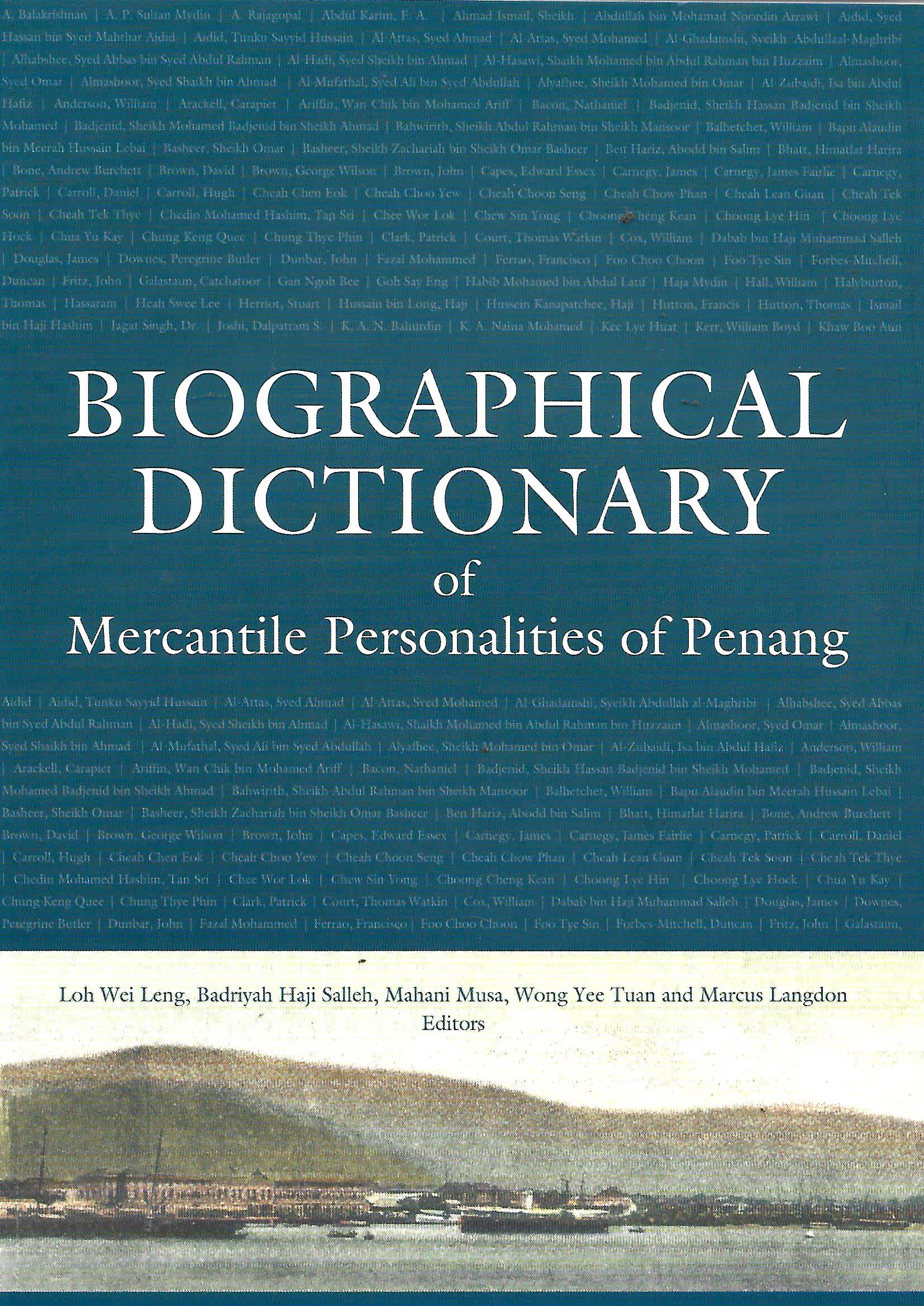
This book highlights the life of merchants and business people from all communities, including the Acehnese, Arabs, Armenians, British, Chinese, Eurasians, Indians, Malays, Parsees and the Scottish. The entries are introduced by an overview of the historical development of the island since the coming of the Portuguese to Malacca. It appears clearly that the trader and business community has formed a major pillar since the late 18th century of the city, when Penang was made an entrepôt. The editors in a note on the biographies (200) explain how they proceeded. Each entry begins with the surname, given name (Chinese names in Hokkien dialect, followed by characters, and also in Mandarin, transcribed in pinyin), date of birth and death, profession, occupation, major role in the society. It ends with references in abbreviated form, while full references are given in a general bibliography including public records, archives and archival materials, newspapers and magazines (in English, Malay, and Chinese), unpublished theses, papers and manuscripts, personal communications, books and journal articles (in English, Malay and Chinese), and internet sources. The use of a symbol in the index allows the reader to know if a personality is listed in the main entries for in the brief biographical sketches that is those for whom the biodata are not yet sufficiently documented, but who merit inclusion in the history of Penang. If we consider that in 1810, the Indians represented some 30% of the population, Chinese 36%, Malays and Arabs 25% and that in 1860, the Chinese became the majority in Penang, one would not be surprised to notice that they are also the best represented among the biographies. Although this dictionary is still far from being exhaustive, as the editors admit, it does great service to the historians who want to deepen their knowledge on these personalities and their part in the making of Malaya and even Southeast Asia.
Reviews
There are no reviews yet.